How to Stay Safe Online
Mohamed Sesay
Most people who get hacked are not the victims of some brilliant, movie-style cyberattack. They are caught by ordinary tricks that work because of one weak habit, one rushed moment, one code shared with the wrong person. That is actually encouraging, because it means a handful of simple habits will close the door on the large majority of attacks that happen to real people. This guide gives you those habits.
1. Guard your codes and PINs
This rule comes first because it protects your money most directly. No bank, no mobile money agent, and no company staff member will ever ask you for your PIN or for the one-time code that was just sent to your phone. Not to verify you, not to confirm a prize, not to fix a problem. Anyone who asks is a scammer, with no exceptions. That code is the key to your money, so treat it exactly like cash you can never get back, because that is precisely what it is.
The classic trick
A caller says you won airtime or a grant and asks you to "confirm" with the code you just received. That code is them trying to log in as you. Hang up. Real prizes never need your code.
2. Use strong, unique passwords
When one website you signed up for gets breached, attackers take the leaked email and password and try the same combination everywhere else: your email, your social media, your money apps. If you reused that password, they are now inside all of them. This is why your email and money accounts each deserve their own strong, unique password that you use nowhere else. A passphrase of three random words, like "mango-bridge-thunder," is both stronger and easier to remember than something like "Pass123". Length beats complexity.
3. Turn on two-step verification
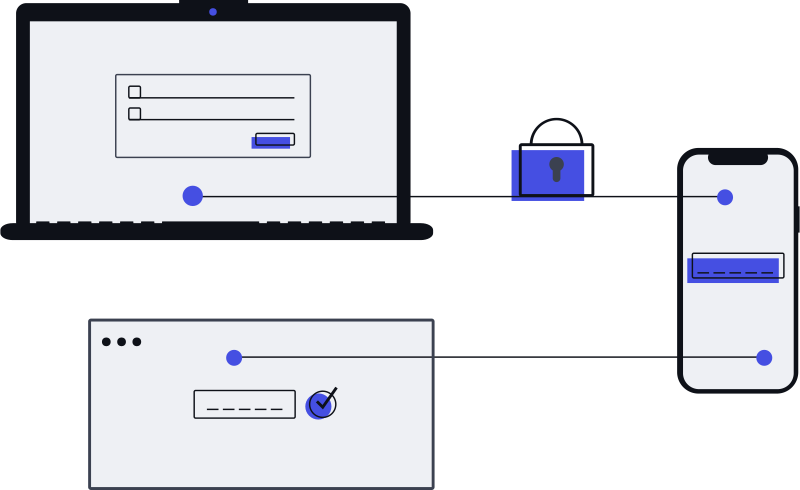
Two-step verification means that even if someone steals your password, they still cannot get in without a second code that lives on your phone. It is the single biggest security upgrade you can make, and it takes five minutes. Start with your email, because your email is the master key that can reset the password on almost everything else you own.
- Secure your email first; it unlocks everything else, so protect it hardest.
- Lock your phone with a PIN or fingerprint, not a swipe pattern people can watch you draw.
- Be suspicious of links in SMS and WhatsApp, even when they appear to come from someone you know.
If something feels off
Slow down. Scammers rely on urgency to push you past the calm thirty-second check that would expose the lie. A real opportunity will still be there after you have checked it. A scam will not survive the pause.
Related